Heroes of History: Epic Empire
- 4.5
- Rating
- 1.00M
- Installs
- Free
- Price

 Analysis by App-foxy
I spent time with Heroes of History: Epic Empire as a strategy game built around collecting historical heroes, sending them into battles, and growing a civilization. That combination gives it a broader rhythm than a simple combat game: one moment I was thinking about which hero to develop, and the next I was deciding how much attention to give the settlement side of the experience. It is free to start, made by InnoGames GmbH, and aimed at players aged 10 and up.
What stood out to me first was its focus on steady progress rather than one isolated match. The appeal is not only winning the next encounter; it is seeing a growing collection become more useful over time. The game has reached over a million installs and holds a 4.6 average from roughly 74 thousand ratings, which fits my impression that it is designed for a wide audience rather than only for dedicated strategy specialists.
How the early goals shape the first sessions
The opening hours work best when I treated them as a sequence of manageable goals instead of trying to understand the whole empire at once. Building up the civilization gives the game a clear direction, while hero collection adds a second reason to keep checking what has become available. The result is a useful early loop: improve the settlement, strengthen the roster, and return to battle with a little more confidence.
You May Also Like

 Blood Strike: 2.5 Anniversary
Blood Strike’s Loadouts Turn Every Drop Into a Tactical Gamble
A close look at Blood Strike’s custom loadouts: how fast access to signature weapons reshapes its battle royale rhythm, rewards preparation, and narrows the gap between fights.

 Pandora - Music & Podcasts
Pandora’s Music Is Easy to Start, but Harder to Recover
Pandora’s strength is its low-effort path from a seed to a station. Its weak spot is how much confidence it asks you to place in connection, setup, and quiet recovery.

 8 Ball Pool
 Is Built on Rivalries, Rematches, and Routine
A close look at the rivalries, rematches, shared routines, and unanswered safety questions that turn a quick pool match into a persistent mobile community.

 Samsung Music
’s Quiet Strength Is Playing What You Already Own
Its reach comes less from spectacle than from dependable access to a personal library. That simplicity is both the app’s strongest retention engine and its ceiling.

 AccuWeather: Weather Radar
AccuWeather Review: A Quick, Clear Forecast for Everyday Decisions
For everyday plans, the best forecast is the one you can understand quickly. AccuWeather makes rain timing, radar, and local conditions easy to act on, with a few trade-offs.

 Hill Climb Racing
Why Hill Climb Racing Still Turns Crashes Into One More Run
A tiny car, a bumpy hill and one more upgrade: Hill Climb Racing keeps resurfacing because its simple chaos makes every near-miss feel personal.
More From Our News Desk



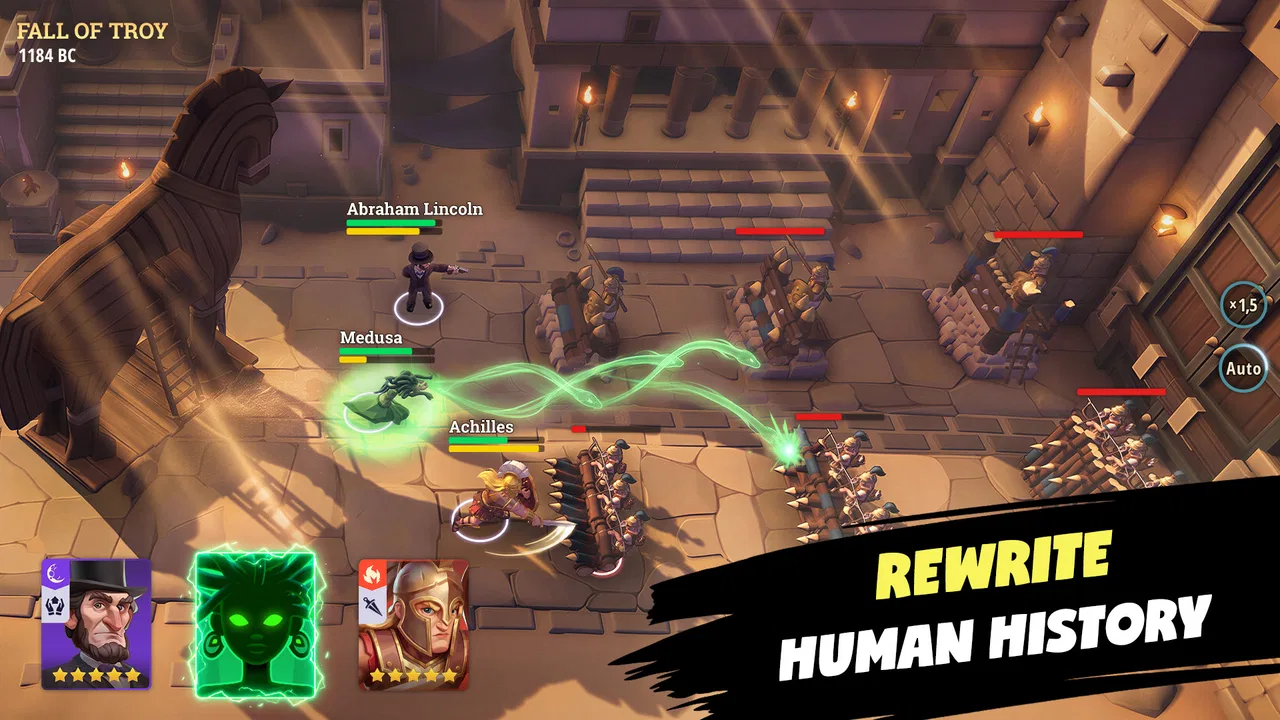
I liked that the historical theme gives the roster a stronger identity than a collection of anonymous units. Even when the basic objective is familiar, choosing a hero feels more personal because the characters are tied to recognizable periods and figures. That makes unlocking someone new feel like an event in the collection, not just another numerical upgrade.
My practical advice is to avoid spreading attention across every available hero immediately. Early resources feel more valuable when I concentrated on a small working group and used them consistently. A broad collection is attractive, but a team with clear investment is easier to understand and usually makes the next battle less confusing. This is one of the first trade-offs the game presents: collecting is exciting, while focused development is more efficient.
The settlement layer also helps new players who need a reason to keep moving forward. Instead of facing a blank strategy screen, I always had a visible sense of construction and improvement. That does not make every decision deep, but it prevents the early game from feeling like a string of disconnected fights.
What progress feels like outside combat
The most satisfying progress signals are the ones I could see without opening a detailed explanation. A stronger civilization, a more capable group of heroes, and access to the next objective all made the account feel different from the one I had started with. These changes matter because strategy games can otherwise make improvement feel abstract.
I found it helpful to pause after each meaningful unlock and reassess the roster rather than immediately rushing into the next activity. A newly available hero can change which combinations are worth trying, but only if I actually compare that option with the team already doing the work. This small habit saved me from replacing useful characters simply because a new one looked more interesting.
The game’s collection structure also creates a gentle planning problem. Do I improve a reliable hero, or save resources for a character who may fit a later battle better? I preferred making that choice myself instead of treating every reward as an automatic upgrade. Players who enjoy watching a roster develop will probably appreciate this, while anyone wanting instant access to a fully formed team may find the pace slow.
Another useful signal is the way the civilization gives context to progress. In a battle-only strategy title, a victory can disappear from memory as soon as the results screen closes. Here, the broader building goal makes victories feel connected to something larger. I still wanted more variety from some stretches, but the empire-building frame gives ordinary advancement a clearer purpose.
Where the difficulty starts asking for thought
The challenge curve felt more comfortable when I stopped assuming that a higher-level hero would solve every problem. Battles reward preparation, and the important question is often whether my chosen group makes sense for the situation rather than whether every member is individually strong. That encouraged me to experiment with the collection instead of relying on one favorite character.
This is also where the game becomes less suitable for players who want a purely casual button-tapping experience. The early goals are approachable, but the strategy layer becomes more noticeable as progress continues. I had to pay attention to who was ready for investment, which improvements were worth prioritizing, and whether a failed attempt was caused by weak development or poor team selection.
When a battle went badly, I found it more useful to change one variable at a time. Replacing the whole group made it difficult to learn anything. Switching one hero, strengthening one important member, or approaching the next encounter with a different plan gave me a clearer result. That is a small but important workflow for this game: treat setbacks as information instead of immediately spending everything on upgrades.
The difficulty is not always perfectly smooth. A run of comfortable victories can make the next obstacle feel sharper than expected, especially if I had been investing without a clear role for each hero. That unevenness is not necessarily a flaw, because it creates moments that demand attention, but it can frustrate players who prefer a very predictable climb.
I would describe the challenge as more about managing progress than mastering fast reactions. That makes it a good fit for people who enjoy planning between battles. If your ideal strategy game is based on rapid decisions, precise timing, or direct control of every movement, this is probably not the strongest match.
The everyday rhythm of collecting and building
A realistic use case for me was playing in short sessions during a commute or while waiting for an appointment. I could check the civilization, review the hero group, complete a few objectives, and stop without feeling that I had abandoned a long real-time match. That structure makes the game easier to fit around a busy day than a strategy title that expects uninterrupted attention.
At home, I naturally spent longer with it because the collection invited comparison. I wanted to see whether a new hero deserved a place in the main group and whether a settlement improvement changed what I should do next. The same design therefore supports both brief check-ins and more deliberate sessions, although the shorter format is better when I already know my next goal.
The main retention pressure comes from the promise of gradual improvement. There is always another hero to consider, another part of the civilization to develop, or another battle that seems more manageable after one more upgrade. That can be motivating, but it can also turn the game into a checklist if I stopped making meaningful choices.
I noticed that the best sessions were the ones where I set a personal limit before starting. For example, I might focus on improving one core hero or reaching one immediate objective, then close the game. Without that boundary, collection-based progression can encourage unnecessary tinkering. The game is more enjoyable when progress has a purpose rather than becoming a habit of opening every available screen.
Free entry, purchases, and the question of patience
The game is free to play, with in-app purchases ranging from $1.99 to $199.99 per item. That range is important to keep in mind before committing to the longer progression. I could begin without paying, but the presence of purchases means players should decide early how they want to approach the economy.
My recommendation is to treat spending as optional support for convenience or enthusiasm, not as a requirement for understanding the game. The strongest reason to play is the gradual development of the civilization and roster. If that slower process is enjoyable, the free entry makes sense. If the only satisfying outcome is rapid access to stronger heroes, the purchase structure may create pressure rather than fun.
Parents should also remember that the age guidance is Everyone 10+, while purchases are available inside the game. That combination makes it sensible to review device-level purchase controls before handing it to a child. The game itself is approachable, but the spending question is separate from the age rating.
Compared with a traditional premium strategy game, this model is more accessible at the start but less straightforward about the long-term pace. Compared with a purely competitive battle game, it places more emphasis on collection and civilization growth. I preferred that broader structure, though players who want a single upfront purchase and a fixed campaign may be happier elsewhere.
How it compares with familiar strategy alternatives
Against a classic city-builder, Heroes of History has a stronger character-collection hook. The heroes give battles a face and make each new addition feel more memorable than a simple building upgrade. The trade-off is that the experience is less about designing a city in complete freedom and more about following a guided progression through heroes, objectives, and development.
Against a squad-collection battle game, it offers more context through the civilization. I was not only arranging a team for the next encounter; I was also working toward a wider sense of historical growth. That makes the game feel less disposable between battles, although it may seem slower to someone who wants immediate tactical variety.
It also differs from a deep, turn-based tactics game. The appeal here is the long arc of collecting and improving, not the promise that every individual battle will become a complex puzzle. I would choose this title when I want a relaxed strategy routine with recognizable heroes. I would choose a more traditional tactics game when I want detailed positioning and a campaign where each encounter is the main attraction.
That distinction helps explain who should skip it. Players who dislike incremental upgrades, repeated development tasks, or waiting for a roster to become stronger may lose interest. It is also not the ideal choice for someone seeking a historically rigorous simulation; the historical figures provide flavor and identity, but the game’s priority is accessible strategy progression.
Small decisions that improve the experience
My first concrete tip is to keep a clear “main team” while maintaining a smaller experimental group. The main team protects progress when a battle becomes difficult, while the second group lets me test new heroes without dismantling what already works. This approach makes collecting more enjoyable and reduces the frustration of constantly rebuilding the roster.
Second, I would spend development resources with the next obstacle in mind rather than upgrading automatically after every reward. A modest improvement that solves a current weakness is more useful than a scattered set of upgrades that looks impressive but does not change the outcome of a battle.
Third, I recommend using the civilization screen as a planning tool, not merely a place to claim progress. Before starting a longer session, I checked what the next building or objective seemed to ask of me and then chose battles and hero investments that supported it. This gave my play a direction and reduced the feeling of wandering through menus.
Finally, I would not judge a hero only by how exciting the unlock feels. I compared the newcomer with the role already covered by my main group and asked whether the replacement solved a real problem. That simple check prevented the collection system from turning every new reward into an obligation.
Version, access, and who will enjoy the long climb
The current version is 1.39.3, and the game supports Android 7.1 or later. Those details make it accessible to people using a range of Android devices, though the actual comfort of play will still depend on the phone’s screen and performance. I found that the experience benefits from a device where menus and character information are easy to inspect, because planning is part of the enjoyment.
The title is best for players who like a steady sense of ownership: a roster that becomes familiar, a civilization that gradually develops, and battles that give those improvements a reason to exist. It is especially suitable if you enjoy returning for focused sessions instead of finishing a complete strategy campaign in one sitting.
I would be more cautious recommending it to someone who becomes impatient with gradual unlocks or who dislikes the temptation created by optional purchases. The game’s retention design works because it gives me reasons to come back, but those same reasons can feel repetitive if I am not interested in long-term collection.
My progression verdict
Heroes of History: Epic Empire succeeds when its four parts support one another: early goals make the opening approachable, progress signals give upgrades meaning, rising difficulty encourages better decisions, and the collection keeps the next session easy to imagine. I found the pacing most satisfying when I played deliberately, strengthened a focused group, and treated each new hero as a strategic question rather than an automatic replacement.
It is not a flawless fit for every strategy fan. The long progression can feel slower than a match-based alternative, the challenge may arrive in uneven steps, and the purchase range makes patience an important part of the experience. Still, the combination of historical heroes and civilization growth gives it a clear personality.
My final recommendation is simple: try it if you want a free strategy game that rewards regular, thoughtful progress and you enjoy building a collection over time. Skip it if you want a compact premium campaign, intense tactical control, or a game with no pressure to consider optional spending. For the right player, the strongest reason to keep playing is not one dramatic battle, but the feeling that every sensible choice makes the next stage of the empire more capable.
FAQs for Heroes of History: Epic Empire
01What is the main objective of Heroes of History: Epic Empire?
Heroes of History: Epic Empire is a strategy-based game where players build and expand their own empire by recruiting historical figures. The main objective is to conquer territories, manage resources, and engage in epic battles against other players or AI to become the ultimate ruler. Players must strategize to balance growth and defense.
02Is Heroes of History: Epic Empire free to play?
Yes, the game is free to download and play on both Android and iOS platforms. However, it does offer in-app purchases that can enhance the gaming experience, such as premium currency, special characters, and unique upgrades. These purchases are optional and not required to progress in the game.
03What kind of historical figures can I recruit in the game?
The game features a wide array of historical figures from different eras and cultures. Players can recruit leaders, warriors, and strategists such as Cleopatra, Julius Caesar, and Genghis Khan. Each character has unique abilities that can be leveraged to gain strategic advantages in battles and empire-building activities.
04How does multiplayer mode work in Heroes of History: Epic Empire?
In multiplayer mode, players can form alliances with friends or compete against other players around the world. The game allows for real-time battles and cooperative gameplay in which alliances can work together to conquer rival empires and defend their territories. Communication tools within the game facilitate teamwork and strategic planning.
05What are the system requirements for Heroes of History: Epic Empire?
For Android devices, the game requires at least Android 5.0 and a minimum of 2GB RAM to run smoothly. For iOS, it is compatible with iOS 11 or later. A stable internet connection is recommended for optimal gameplay, especially when engaging in multiplayer battles or downloading updates.
Pros
- Engaging historical storyline
- Stunning graphics and animations
- Smooth user interface
- Variety of characters and skills
- Regular updates with new content
Cons
- Can be resource-heavy on devices
- In-app purchases can be costly
- Requires constant internet connection
- Learning curve for beginners
- Occasional server lag issues

Heroes of History: Epic Empire
Gallery